

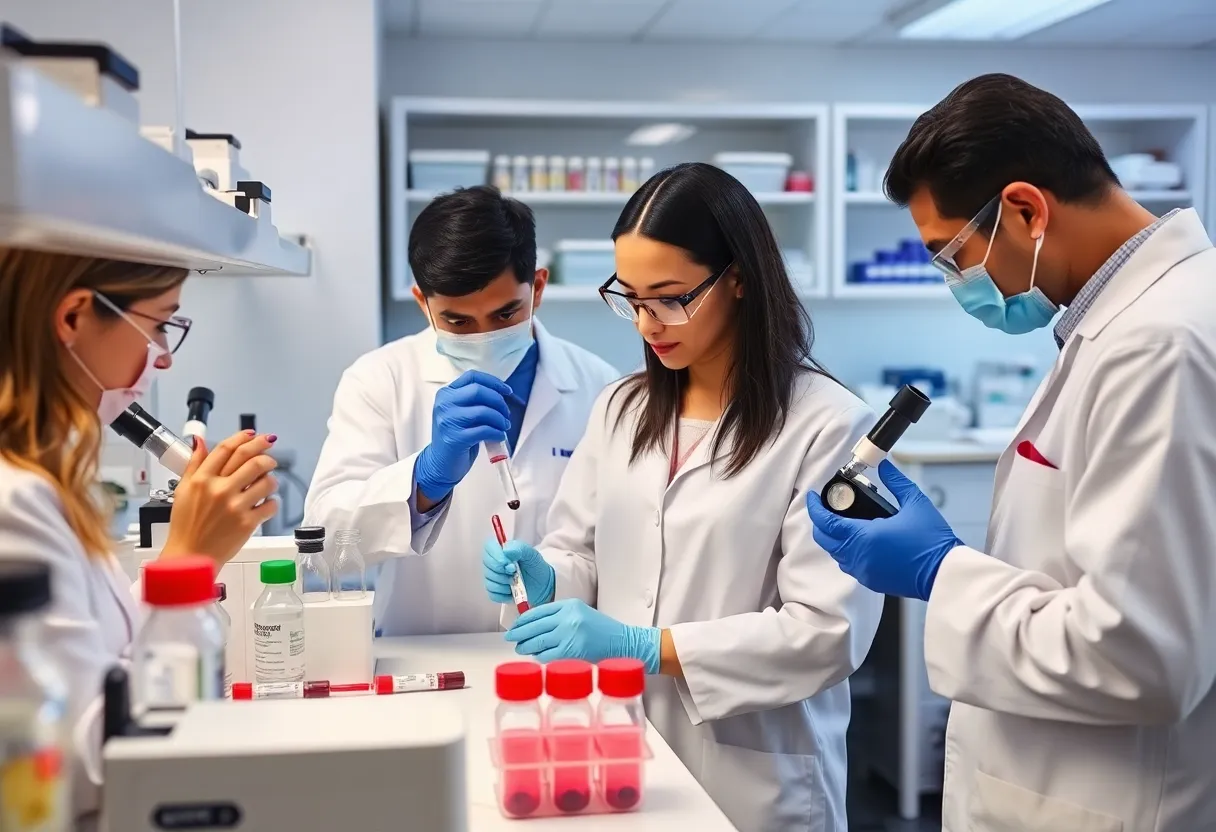
San Diego, December 31, 2025
The University of California, San Diego (UCSD) is at the forefront of HIV cure research with its innovative “Last Gift” study. This groundbreaking initiative invites terminally ill patients with HIV to contribute valuable clinical data and biomaterials to advance our understanding of HIV reservoir dynamics. By breaking down barriers in research, UCSD is leading the charge to develop new treatment strategies and ultimately seek a cure for HIV, reflecting a strong collaborative spirit within the San Diego community to make significant advancements in healthcare.
UCSD’s “Last Gift” Study Paves the Way for HIV Cure Research
Exploring innovative solutions to HIV persistence through groundbreaking research in San Diego.
San Diego, CA – The University of California, San Diego (UCSD) is making waves in the realm of medical research with its transformative “Last Gift” study, which focuses on understanding HIV reservoir dynamics in terminally ill patients. This research isn’t just about science; it reflects the remarkable resilience and willingness of local entrepreneurs and innovators who strive to push boundaries in healthcare, potentially offering new paths to curing HIV.
As we continue to see extensive advancements in medical technology and research, empowered by the determination of researchers and local institutions, San Diego stands out as a beacon of hope in the fight against HIV. The “Last Gift” study exemplifies how reducing red tape can lead to significant breakthroughs that advance public health and enhance community well-being, showcasing the potential of what can be achieved when businesses, universities, and communities work together.
Overview of the Last Gift Study
The “Last Gift” study invites terminally ill individuals with HIV, who have a prognosis of less than six months, to contribute to essential HIV cure-related research. Participants share detailed clinical and sociodemographic data before their passing, provide blood samples during their lives, and donate their entire bodies after death for rapid autopsy. This innovative framework allows researchers at UCSD to reconstruct the spatial dynamics of HIV across different tissues, shedding light on the virus’s persistence throughout the body.
Key Findings from Recent Research
Recent findings derived from the “Last Gift” cohort have illuminated critical aspects of HIV dynamics:
- HIV Persistence Across Tissues: Research reveals that HIV can persist in diverse compartments—including the gastrointestinal tract and lymphoid tissues—even among individuals receiving extensive combination antiretroviral therapy (cART). Such results highlight the complexity of eradicating the virus and underscore the need for comprehensive strategies that target all potential reservoirs.
- Impact of Gut Microbiome on HIV Dynamics: Investigations have identified a strong correlation between systemic inflammation, gut dysbiosis (a microbial imbalance), and alterations in HIV reservoir composition, demonstrating the intricate relationship between immune response, gut health, and HIV persistence.
- Antiretroviral Drug Penetration in Tissues: Preliminary mappings of antiretroviral drugs, such as dolutegravir, revealed varied concentrations across tissues, with lower drug levels observed in the central nervous system and higher concentrations found in the gastrointestinal tract and kidneys. This information is vital in optimizing treatment regimens to enhance drug efficacy in all potential HIV reservoirs.
Ethical Considerations
The “Last Gift” study also prompts significant ethical discussions surrounding informed consent and participant autonomy. Experts stress the importance of constructing ethical frameworks to protect the rights of participants and guide the responsible conduct of end-of-life research. Ensuring that these ethical considerations are addressed is crucial in advancing scientific inquiry without compromising participant dignity.
Conclusion
The groundbreaking work being conducted through the “Last Gift” study at UCSD plays a pivotal role in enhancing the understanding of HIV persistence and developing potential cure strategies. By focusing on the HIV dynamics observed in terminally ill individuals, the research aims to foster more effective treatments and moves us closer to achieving a cure for HIV. As San Diego continues to support innovative research and entrepreneurial endeavors, local communities are encouraged to engage with and support healthcare advancements that promise to transform lives.
FAQ
What is the “Last Gift” study?
The “Last Gift” study involves terminally ill individuals with HIV who have a prognosis of less than six months and wish to contribute to HIV cure-related research. Participants provide detailed clinical and sociodemographic information before their death, blood samples while alive, and their entire bodies after death for rapid autopsy. This approach allows researchers to reconstruct the spatial dynamics of HIV across the body and understand how the virus persists in various tissues.
What have recent studies found about HIV persistence?
Recent studies utilizing the “Last Gift” cohort have shown that HIV persists in multiple compartments of the body, including the gastrointestinal tract and lymphoid tissues, even in individuals undergoing prolonged combination antiretroviral therapy (cART). This finding underscores the challenges in eradicating the virus and the need for strategies targeting all reservoirs.
How does the gut microbiome affect HIV dynamics?
Studies have demonstrated that systemic inflammation and gut dysbiosis (microbial imbalance) influence HIV reservoir composition and viral movement within the body. These findings highlight the complex interplay between the immune system, gut health, and HIV persistence.
What are the ethical considerations of the “Last Gift” study?
The “Last Gift” study raises important ethical questions, particularly concerning informed consent, participant autonomy, and the balance between potential benefits and risks. Researchers emphasize the need for ethical frameworks that protect participants’ rights and ensure the responsible conduct of end-of-life HIV cure-related research.
Key Features of the Last Gift Study
| Feature | Description |
|---|---|
| Study Population | Terminally ill individuals with HIV who have a prognosis of less than six months and wish to contribute to HIV cure-related research. |
| Data Collection | Participants provide detailed clinical and sociodemographic information before their death, blood samples while alive, and their entire bodies after death for rapid autopsy. |
| Research Focus | Reconstructing the spatial dynamics of HIV across the body and understanding how the virus persists in various tissues. |
| Key Findings | HIV persists in multiple compartments of the body, including the gastrointestinal tract and lymphoid tissues, even in individuals undergoing prolonged combination antiretroviral therapy (cART). |
| Ethical Considerations | Emphasis on informed consent, participant autonomy, and the balance between potential benefits and risks in end-of-life HIV cure-related research. |
Deeper Dive: News & Info About This Topic
HERE Resources

