

San Diego, January 31, 2026
UC San Diego has introduced the Disease Incidence and Resource Estimator (DIRE), a predictive analytics platform that forecasts dengue and malaria outbreaks in Brazil and Peru. The platform allows policymakers to identify potential disease hotspots, enabling proactive resource allocation and preventive measures. Developed in partnership with UNICEF, DIRE aims to enhance global health preparedness and transform academic research into practical applications for decision-makers. Its initial focus on Brazil and Peru could lead to broader applications in various regions.
San Diego, CA – UC San Diego Launches Predictive Dashboard for Disease Outbreaks
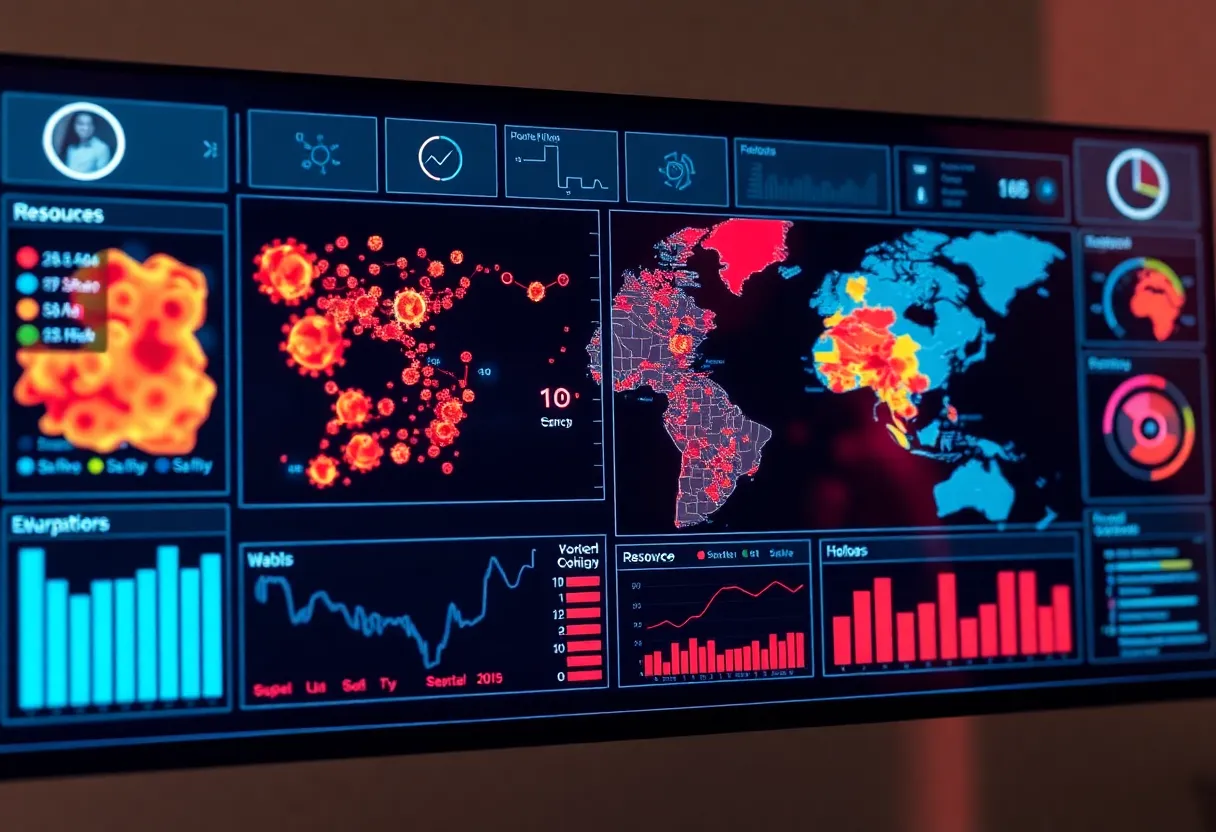
UC San Diego researchers have unveiled the Disease Incidence and Resource Estimator (DIRE), a geospatial predictive analytics platform designed to forecast dengue and malaria outbreaks in Brazil and Peru, and to determine the necessary health resources for their control and treatment.
The DIRE platform utilizes interactive mapping to predict potential disease hotspots, enabling policymakers to proactively allocate resources and implement preventive measures. This initiative aims to transform academic disease forecasting into actionable guidance for decision-makers, facilitating timely responses to emerging health threats.
Developed in collaboration with UNICEF and New Light Technologies, DIRE is currently in a soft launch phase, focusing on Brazil and Peru as initial regions. The platform’s success in these areas could pave the way for its expansion to other regions and infectious diseases, enhancing global preparedness against potential outbreaks.
Empowering Policymakers with Data
Gordon McCord, an associate teaching professor at UC San Diego’s School of Global Policy and Strategy, emphasized the project’s goal of bridging the gap between academic research and practical application. By providing governments with predictive insights and resource estimates, DIRE aims to shift the approach from reactive to proactive in managing infectious diseases.
Contributions to Public Health Preparedness
In addition to DIRE, UC San Diego has been involved in various initiatives to enhance public health preparedness. The university has developed the eCOVID remote patient monitoring app, which tracks patient status remotely, and has piloted Google-Apple notification technology to help prevent COVID-19 outbreaks. These efforts underscore UC San Diego’s commitment to leveraging technology and research to address public health challenges effectively.
Global Health Implications
The introduction of DIRE represents a significant advancement in disease outbreak prediction and resource planning, offering a valuable tool for global health authorities to mitigate the impact of infectious diseases through informed decision-making and timely interventions. As the platform potentially expands, its influence on global health strategies may reshape how various regions tackle infectious disease threats.
Challenges and Opportunities
While the development of DIRE reflects innovation within the field of global health, it also faces the challenge of implementation in regions with varying resources and governance structures. Nevertheless, if successful, the platform stands to improve the flexibility and effectiveness of health responses, ensuring that regions facing outbreaks can respond swiftly and adequately.
Conclusion
The launch of the Disease Incidence and Resource Estimator signifies a major step forward in the proactive management of infectious diseases. By enabling better preparedness and timely responses, UC San Diego is setting a benchmark for how technology can support public health initiatives globally. As innovation continues, it is essential that the community supports and engages with local initiatives that promote health security and business growth in San Diego County and beyond.
Frequently Asked Questions (FAQ)
What is the Disease Incidence and Resource Estimator (DIRE)?
DIRE is a geospatial predictive analytics platform developed by UC San Diego, designed to forecast dengue and malaria outbreaks in Brazil and Peru, and to determine the necessary health resources for their control and treatment.
How does DIRE assist policymakers?
DIRE provides interactive mapping to predict potential disease hotspots, enabling policymakers to proactively allocate resources and implement preventive measures, thereby facilitating timely responses to emerging health threats.
Who developed DIRE?
DIRE was developed by researchers at UC San Diego, in collaboration with UNICEF and New Light Technologies.
Which regions are currently using DIRE?
DIRE is currently in a soft launch phase, focusing on Brazil and Peru as initial regions for its application.
What other public health initiatives has UC San Diego been involved in?
UC San Diego has developed the eCOVID remote patient monitoring app and piloted Google-Apple notification technology to help prevent COVID-19 outbreaks, demonstrating its commitment to leveraging technology and research to address public health challenges effectively.
Key Features of the Disease Incidence and Resource Estimator (DIRE)
| Feature | Description |
|---|---|
| Geospatial Predictive Analytics | Utilizes interactive mapping to forecast dengue and malaria outbreaks in specific regions. |
| Resource Planning | Determines the necessary health resources required for controlling and treating predicted outbreaks. |
| Proactive Decision-Making | Enables policymakers to allocate resources and implement preventive measures ahead of potential disease surges. |
| Collaborative Development | Developed in partnership with UNICEF and New Light Technologies, with a focus on Brazil and Peru as initial regions. |
| Global Health Preparedness | Aims to enhance global preparedness against infectious diseases through informed decision-making and timely interventions. |
Deeper Dive: News & Info About This Topic
HERE Resources
Why San Diego Construction Companies Need Single Database ERP Systems
Streamlining Success: A San Diego Construction Firm’s Guide to ERP and Workflow Automation

