

Mexico City, Mexico, December 10, 2025
Mexico has agreed to boost water deliveries to the United States in response to a potential 5% tariff threat from President Trump over unmet water-sharing obligations. President Claudia Sheinbaum announced plans for partial deliveries this month despite severe drought conditions and infrastructure limitations. The countries are engaged in ongoing discussions to address these challenges, underscoring the complexities of international water treaties and the impact on agriculture in border regions, particularly for Texas farmers.
Mexico City, Mexico
Mexico Responds to U.S. Water Demands Amid Drought Challenges
Recently, Mexico has agreed to increase water deliveries to the United States following President Trump’s threat of a 5% tariff over water-sharing obligations. This development illustrates the intricate relationship between international trade and resource management, emphasizing the importance of effective dialogue in preserving beneficial cross-border agreements.
President Claudia Sheinbaum announced plans to send more water to the U.S., although immediate delivery is hindered by severe drought conditions and existing pipeline limitations. A partial delivery is proposed for this month, with additional future commitments being planned. Upcoming discussions with U.S. officials aim to explore concrete solutions to this pressing issue.
A Closer Look at the 1944 Water Treaty
Under the 1944 Water Treaty, Mexico is mandated to deliver 1.75 million acre-feet of water from the Rio Grande every five years. However, the current landscape reveals a significant shortfall of approximately 800,000 acre-feet, primarily attributed to ongoing drought conditions and infrastructure hurdles that have delayed compliance with these treaty obligations.
The pressing nature of the issue comes into sharper focus when considering the economic ramifications for U.S. farmers, particularly in Texas, who are directly impacted by water supply fluctuations. President Trump’s assertion of potential tariffs reflects broader national concerns over agricultural sustainability and economic viability in the border region.
Negotiations in Progress
Despite heightened tensions, both countries are engaged in productive discussions to resolve the water dispute. Mexico has proposed a framework that includes a partial delivery this month, with additional commitments being scheduled for subsequent years. Technical meetings are being organized to ensure that both nations can align on a resolution that satisfies their respective needs and fulfills treaty obligations.
Understanding Drought Impact and Infrastructure Challenges
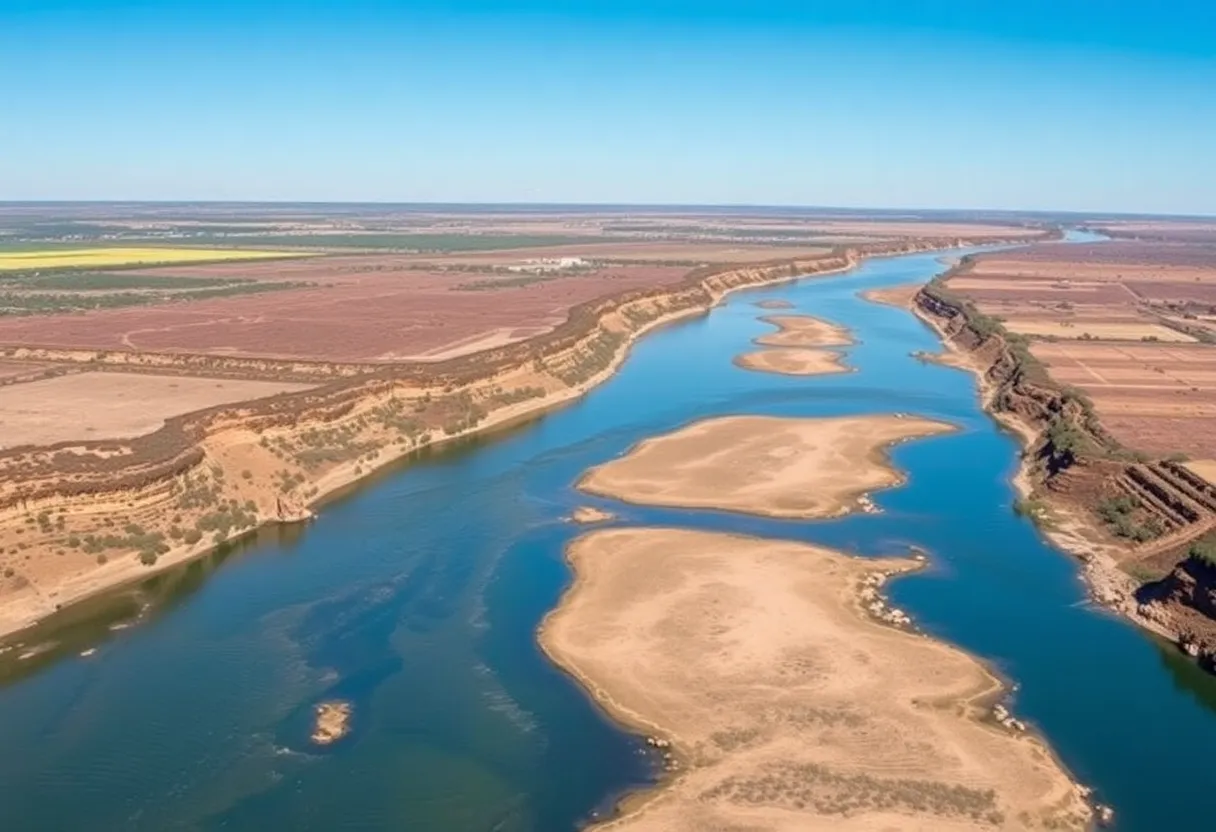
Severe drought conditions not only exacerbate water scarcity but also highlight the infrastructural limitations within Mexico that impede efficient water delivery. Addressing these infrastructure issues is vital for Mexico to adhere to treaty obligations and for both nations to maintain stable agricultural outputs.
The Bigger Picture: International Water Agreements
This situation serves as a reminder of the complexities surrounding international water agreements. Such agreements must navigate environmental pressures and differing political landscapes to ensure that both parties can meet their obligations while protecting their citizens’ interests. The ongoing dialogue underscores a commitment on both sides to come to an equitable solution.
Encouraging an Engaged Community Response
The unfolding developments surrounding U.S.-Mexico water sharing stresses the importance of community involvement and understanding of local and international resources. As residents of San Diego, and indeed all Californians, we must remain engaged in these issues, advocating for solutions that support sustainable growth and informed resource management.
Conclusion
Overall, the resolution of these water-sharing obligations between Mexico and the United States is crucial not only for agricultural stability but also for fostering a collaborative relationship that can drive future economic growth. As individuals and business owners, staying informed about these developments allows us to contribute positively to discussions that shape the San Diego County economy and its myriad opportunities. Supporting local businesses and advocating for sound policies will empower our community as we navigate these complex international relationships.
Frequently Asked Questions (FAQ)
What is the 1944 Water Treaty?
The 1944 Water Treaty is an agreement between the United States and Mexico that outlines the allocation of water from the Rio Grande and Colorado River systems. It requires Mexico to deliver 1.75 million acre-feet of water to the U.S. every five years, while the U.S. must provide 1.5 million acre-feet to Mexico annually from the Colorado River.
Why is Mexico behind on its water delivery obligations?
Mexico is behind on its water delivery obligations due to severe drought conditions and limitations in pipeline infrastructure, which have hindered the country’s ability to meet the treaty’s requirements.
What are the potential consequences of not meeting the water delivery requirements?
If Mexico fails to meet the water delivery requirements, the U.S. has threatened to impose a 5% tariff on Mexican imports, citing negative impacts on Texas farmers and the agricultural sector.
How are the two countries addressing the water dispute?
Both countries are engaged in discussions to resolve the water dispute. Mexico has proposed partial water deliveries this month and additional deliveries in the coming years. Technical meetings are scheduled to address the issue and find a mutually agreeable solution.
Key Features of the Water Dispute
| Feature | Details |
|---|---|
| Treaty Obligations | Mexico must deliver 1.75 million acre-feet of water to the U.S. every five years under the 1944 Water Treaty. |
| Current Shortfall | Mexico is behind on its obligations by approximately 800,000 acre-feet due to drought and infrastructure challenges. |
| U.S. Response | President Trump threatened a 5% tariff on Mexican imports if the water deliveries are not met, citing impacts on Texas farmers. |
| Proposed Solution | Mexico has proposed partial water deliveries this month and additional deliveries in the coming years, with discussions ongoing to finalize the plan. |
Deeper Dive: News & Info About This Topic
HERE Resources

