

California, August 19, 2025
News Summary
California Governor Gavin Newsom is pushing for a redistricting plan that could reshape the political landscape by increasing Democratic representation. With significant opposition from Republicans and a lawsuit filed claiming violations of constitutional requirements, the initiative is set for a special election on November 4. Polling indicates that a majority of Californians prefer the current independent commission, raising questions about the proposal’s acceptance and its implications for the upcoming presidential election.
California Governor Gavin Newsom is advocating for a controversial plan to redraw the state’s congressional maps, a move that has already faced significant opposition from Republican legislators. The proposal aims to finalize redistricting through a special election set for November 4, with the support of various local Democratic leaders and the backing of wealthy donors. Newsom describes this initiative as a vital defense of democracy, particularly in light of recent Republican-led redistricting efforts in Texas that are perceived as politically motivated.
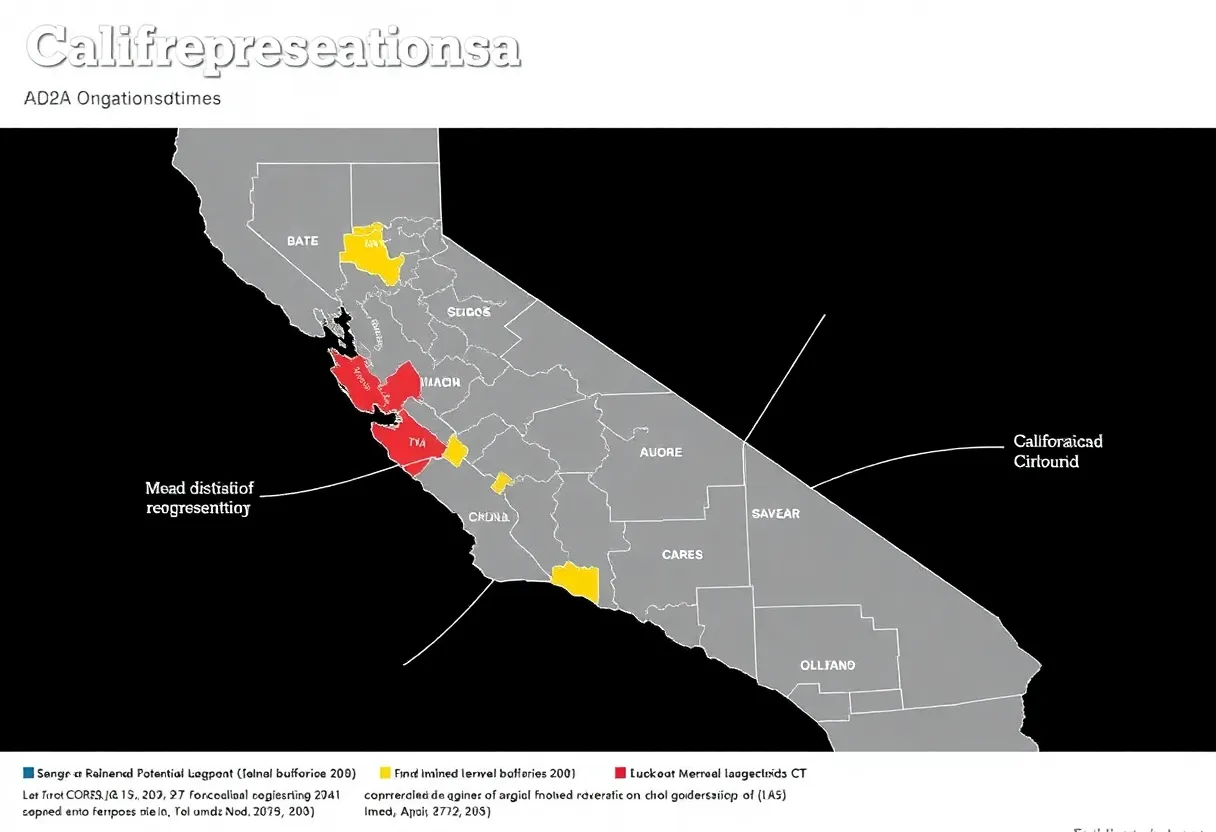
Currently, California’s congressional delegation consists of 43 Democrats and 9 Republicans. The proposed redistricting plan could drastically alter this balance by eliminating over half of the Republican-held districts, potentially adding five additional seats for Democrats. Key Republican districts that are likely to see substantial changes include:
- Rep. Doug LaMalfa: From a +17 Republican advantage to a projected +10 Democratic advantage.
- Rep. Kevin Kiley: Shifting from a +6 Republican edge to an anticipated +8 Democratic lead.
- Rep. David Valadao: Moving to a six-point Democratic advantage in a previously marginal district.
- Rep. Ken Calvert: Losing its GOP voter registration advantage, potentially swinging to a +20 Democratic advantage.
- Rep. Darrell Issa: Facing a shift to a +4 Democratic advantage by incorporating parts of a heavily Democratic area.
California Republicans have reacted strongly, filing a lawsuit that claims the redistricting process violates the state constitution’s requirement for a 30-day review period for new legislation. Critics argue that the proposed changes overlook voters’ rights and aims to expedite the process to implement a ballot measure before the special election. Additionally, the plan is accused of circumventing California’s independent redistricting commission, which was established to minimize political influences in the map-drawing process.
Recent polls indicate that around 64% of Californians oppose Newsom’s initiative, preferring to maintain the independent commission that currently oversees the redistricting process. This opposition is further intensified by remarks from prominent figures, including former Governor Arnold Schwarzenegger, who have urged for the preservation of independent redistricting methods.
In light of his potential ambitions for a presidential run in 2028, Newsom’s political fortunes may be tied closely to the success of the redistricting initiative. Despite California leaning heavily Democratic, the swift nature of these changes raises questions regarding their long-term viability and acceptability among the electorate.
As the November special election approaches, the controversy surrounding the redistricting plan is expected to continue to engage political analysts and voters alike, particularly given the significant implications for California’s political landscape and its broader impact on national politics.
FAQ
What is the main goal of Governor Newsom’s redistricting plan?
The primary goal of Governor Newsom’s redistricting plan is to redraw California’s congressional maps to potentially eliminate more than half of the Republican-held districts, thereby increasing Democratic representation in Congress.
What opposition has the redistricting plan faced?
The redistricting plan has faced significant opposition from California Republicans, who have filed a lawsuit claiming the process violates state constitutional requirements. Critics contend that the plan disregards voters’ rights and bypasses the independent redistricting commission designed to oversee map creation without political bias.
How will the redistricting impact Congressional representation?
If implemented, the redistricting could increase Democratic seats from 43 to 48 by potentially flipping key districts currently held by Republicans.
What are the public sentiments regarding the redistricting plan?
Recent polls show that approximately 64% of Californians oppose Newsom’s redistricting plan, indicating a preference for the existing independent commission rather than the proposed legislative changes.
Key Features of California’s Proposed Redistricting Plan
| Feature | Description |
|---|---|
| Current Distribution | 43 Democrats, 9 Republicans in Congress |
| Proposed Changes | Elimination of over half of GOP-held districts, potential gain of 5 seats for Democrats |
| Republican Districts Affected | Key districts led by LaMalfa, Kiley, Valadao, Calvert, and Issa may swing to Democratic advantages |
| Public Opinion | 64% oppose the plan; favor maintaining independent commission |
| Legal Action | California Republicans have filed a lawsuit citing constitutional violations in the redistricting process |
Deeper Dive: News & Info About This Topic
- Fox News: GOP House Wiped Out by Newsom’s Redistricting Plan
- The Hill: California Supreme Court Redistricting
- ABC7: Young Kim Slams Newsom’s Redistricting Plan
- LA Times: Newsom’s Redistricting and Special Election
- Google Scholar: California Redistricting