

California, February 7, 2026
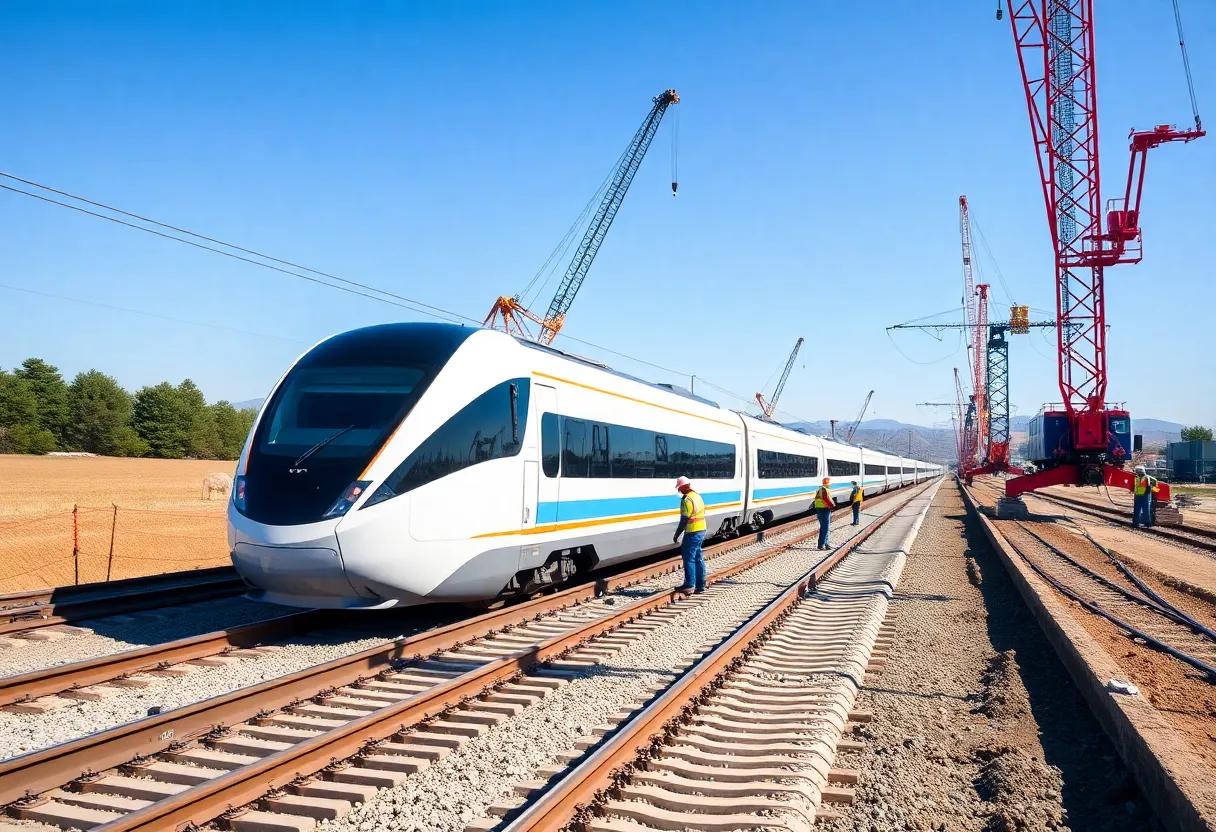
The California High-Speed Rail project is gearing up to lay its first tracks in the Central Valley within months, a major advancement towards establishing the nation’s first true high-speed rail system. This initiative aims to connect major cities across California, including San Francisco and Los Angeles, while facing challenges such as cost overruns and logistical issues. With construction currently active on 119 miles of the project and 463 miles cleared for environmental impact, the timeline anticipates completion of Phase 1 by 2038.
San Diego, California – Bullet Train Project Nears Track-Laying Milestone
The California High-Speed Rail project is set to begin laying its first tracks in the Central Valley within the next seven months, marking a significant advancement in the state’s ambitious transportation initiative. This development brings the nation closer to its first true high-speed rail system, aiming to connect major cities across California.
Project Overview
The California High-Speed Rail system is designed to link the San Francisco Bay Area to Greater Los Angeles, with future extensions to Sacramento and San Diego. The project is divided into two phases:
- Phase 1: Connecting San Francisco to Anaheim, covering approximately 494 miles. This phase is currently under construction, primarily in the Central Valley, with 119 miles of guideway completed and 86 out of 92 structures underway or completed. Environmental clearance has been obtained for 463 miles of the route, making it construction-ready.
- Phase 2: Extending the system to Sacramento and San Diego, with stops in cities such as Stockton, Modesto, San Bernardino, Riverside, and San Diego.
Recent Developments
As of February 2026, the project has achieved several key milestones:
- Central Valley Progress: Construction is active across 119 miles in the Central Valley, with 86 out of 92 structures underway or completed, and 70 miles of guideway completed.
- Environmental Clearance: 463 miles of the 494-mile Phase 1 system between San Francisco and Anaheim are environmentally cleared and construction-ready.
- Upcoming Track-Laying: The project is on track to begin laying its first tracks in the Central Valley within the next seven months, marking a significant advancement in the state’s ambitious transportation initiative.
Challenges and Future Outlook
Despite these advancements, the project has faced challenges, including cost overruns and delays. The initial cost estimate of $33 billion has escalated, with projections now estimating the total cost to complete the entire system at up to $128 billion.
Additionally, the project has encountered issues with land acquisitions, contributing to construction delays and increased costs.
Looking ahead, the California High-Speed Rail Authority continues to work on securing additional funding and addressing logistical challenges to ensure the successful completion of the project. The anticipated completion of Phase 1 is projected for 2038, with future extensions to San Diego and Sacramento to follow.
Conclusion
The California High-Speed Rail project represents a transformative effort in the state’s transportation infrastructure. While it has faced significant challenges, the upcoming commencement of track-laying in the Central Valley signifies a pivotal step toward realizing a high-speed rail system that aims to connect major cities across California, offering a faster, more sustainable mode of transportation for residents and visitors alike.
FAQ
What is the California High-Speed Rail project?
The California High-Speed Rail project is an initiative to build a high-speed rail system connecting major cities across California, including San Francisco, Los Angeles, Sacramento, and San Diego. The system is divided into two phases, with Phase 1 connecting San Francisco to Anaheim and Phase 2 extending to Sacramento and San Diego.
What are the current milestones of the project?
As of February 2026, the project has achieved several key milestones, including active construction across 119 miles in the Central Valley, completion of 70 miles of guideway, and environmental clearance for 463 miles of the 494-mile Phase 1 system. The project is on track to begin laying its first tracks in the Central Valley within the next seven months.
What challenges has the project faced?
The project has encountered challenges such as cost overruns, with projections estimating the total cost to complete the entire system at up to $128 billion, and delays due to issues with land acquisitions, contributing to increased costs and construction delays.
What is the projected completion timeline?
The anticipated completion of Phase 1 is projected for 2038, with future extensions to San Diego and Sacramento to follow.
How will the project impact California’s transportation system?
The project aims to transform California’s transportation infrastructure by providing a faster, more sustainable mode of travel between major cities, potentially reducing traffic congestion and promoting economic development.
Key Features of the California High-Speed Rail Project
| Feature | Description |
|---|---|
| Project Scope | High-speed rail system connecting major California cities, including San Francisco, Los Angeles, Sacramento, and San Diego. |
| Phases | Phase 1: San Francisco to Anaheim; Phase 2: Extensions to Sacramento and San Diego. |
| Current Progress | Active construction across 119 miles in the Central Valley, with 70 miles of guideway completed and environmental clearance for 463 miles of Phase 1. |
| Upcoming Milestone | Beginning of track-laying in the Central Valley within the next seven months. |
| Challenges | Cost overruns and delays due to land acquisition issues. |
| Projected Completion | Phase 1 completion projected for 2038, with future extensions to San Diego and Sacramento. |
Deeper Dive: News & Info About This Topic
HERE Resources
Surge in ADA Website Accessibility Lawsuits Raises Concerns for Small Businesses
California Introduces New Traffic Laws
A Defining Year for Climate Change and San Diego’s Response
New California Laws Set to Transform San Diego in 2026
San Diego Public Transit Provides Free Rides for New Year’s Eve
California High-Speed Rail Project Advances with New Funding Strategy
President Trump Intervenes in California’s Water Allocation
California Announces Automatic Refunds for Electric Bills
California Lawmakers Pass Senate Bill 79 to Upzone Transit Areas
San Diego Residents Brace for Utility Rate Increases

