

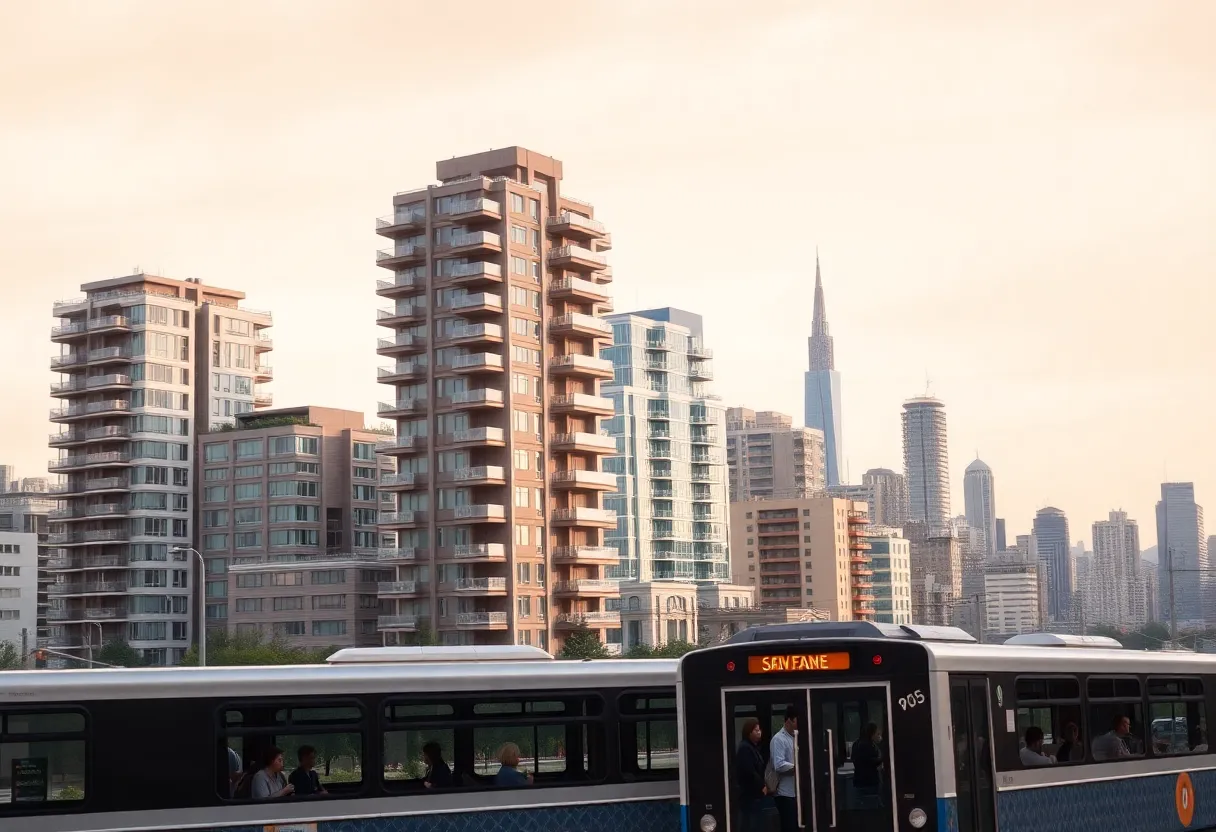
San Francisco, February 5, 2026
The signing of Senate Bill 79, the Abundant and Affordable Homes Near Transit Act, is set to transform California’s housing landscape. The legislation allows for multi-story housing projects near transit stations, aiming to address rising housing costs while igniting discussions about the balance between state intervention and local control. Key provisions include increased housing density, streamlined development processes, and labor considerations, which could benefit local entrepreneurs and developers amid California’s ongoing housing crisis.
San Francisco Housing Bill Sparks Debate on Local Control
A New Era for Housing and Transit in California
San Francisco, California – The recent signing of Senate Bill 79 (SB 79), known as the Abundant and Affordable Homes Near Transit Act, heralds a pivotal moment in California’s ongoing struggle with housing shortages. As the law sets to take effect on July 1, 2026, it presents opportunities for local entrepreneurs and developers to innovate in the housing sector amidst a backdrop of rising costs and stringent regulations. This legislation streamlines the process for constructing multi-story, multi-family housing near transit stations, offering a glimpse into how reduced regulatory burdens can foster entrepreneurial growth in real estate.
Key Provisions of SB 79
- Increased Housing Density Near Transit: The law permits the construction of buildings up to nine stories tall adjacent to major transit stations, with height allowances decreasing as the distance from the station increases.
- Streamlined Development Process: SB 79 allows developers to utilize existing permit streamlining and density bonus laws, making the development process more efficient.
- Eligibility for Affordable Housing Streamlining: Projects under SB 79 are eligible for SB 423 streamlining, which requires the hiring of skilled and trained workers for projects exceeding 85 feet in height.
- Labor Considerations: For projects constructed on transit agency-owned land, there is an option to hire unionized workers or enter into direct contracts with labor unions.
- Exclusions: The law excludes hotel development projects from its provisions and imposes restrictions on developments in areas with very high fire severity zones or those vulnerable to sea-level rise.
Addressing California’s Housing Crisis
With California facing escalating housing prices and affordability challenges, the introduction of SB 79 reflects an urgent need for collaborative solutions. By promoting high-density housing in close proximity to public transit, the legislation is designed not just to alleviate housing shortages but also to support environmentally friendly urban planning. Fewer cars on the road and reduced reliance on vehicles serve as additional benefits, aligning with broader sustainability goals. This could encourage private investment and entrepreneurial projects aimed at revitalizing neighborhoods.
Local Control vs. State Intervention
The difference of opinion within the Democratic Party showcases the tension between state authority and local governance. Proponents of SB 79 believe that overriding local zoning regulations is essential to spearhead necessary changes that facilitate development in transit-rich areas. Critics, however, argue that this may lead to overdevelopment without essential infrastructure in place, potentially compromising community integrity. Such divisions could shape the future of similar legislative efforts across California.
A Shift in Policy Direction
The introduction of SB 79 aligns with additional legislative measures aimed at transforming how California addresses housing needs. Laws like Assembly Bill 2097 and the Affordable Housing on Faith and Higher Education Lands Act have already started to pave the way by easing constraints on innovative housing solutions. This shift in governance could be beneficial for San Diego entrepreneurs seeking to contribute to California’s housing solutions while capitalizing on the growing demand for affordable homes.
Conclusion
As we look toward the implementation of SB 79, it becomes vital for stakeholders, including entrepreneurs, local governments, and community members, to engage in constructive dialogue. Balancing the need for affordable housing against the ideals of local control will not only define the success of this legislation but will also shape the future of California’s urban landscape. We encourage readers to stay informed and support local businesses that are poised to benefit from these changes and actively participate in San Diego’s evolving economic narrative.
FAQ
- What is Senate Bill 79 (SB 79)?
- SB 79, titled the Abundant and Affordable Homes Near Transit Act, is a California law signed by Governor Gavin Newsom on October 10, 2025, set to take effect on July 1, 2026. It allows the construction of multi-story, multi-family housing within a half-mile of public transit stations by overriding local zoning regulations in these areas.
- What are the key provisions of SB 79?
- The law permits buildings up to nine stories tall near major transit stations, streamlines the development process by allowing the use of existing permit streamlining and density bonus laws, makes projects eligible for SB 423 streamlining (which requires hiring skilled and trained workers for projects over 85 feet), offers labor considerations for projects on transit agency-owned land, and excludes hotel development projects from its provisions. It also imposes restrictions on developments in areas with very high fire severity zones or those vulnerable to sea-level rise.
- How has SB 79 affected Democratic divisions over local control?
- The enactment of SB 79 has led to significant discussions within the Democratic Party regarding the balance between state intervention and local governance. Critics argue that the bill undermines local authority by overriding municipal zoning laws, potentially leading to increased density in areas without adequate infrastructure. Supporters contend that the legislation is essential to address California’s housing crisis by promoting sustainable development near transit hubs, thereby reducing reliance on automobiles and supporting environmental goals.
- What is the background context of SB 79?
- California has been grappling with a housing shortage, leading to increased housing costs and affordability issues. Previous legislative efforts, such as Assembly Bill 2097 (AB 2097) signed into law in 2022, have aimed to alleviate these challenges by prohibiting cities and public agencies from mandating parking for most development projects within 0.5 miles of major transit stops. Additionally, the Affordable Housing on Faith and Higher Education Lands Act (Senate Bill 4) signed into law in 2023, has facilitated the construction of affordable housing on lands owned by faith-based institutions and non-profit colleges by streamlining the permitting process and overriding local zoning restrictions. These initiatives reflect a broader trend of state-level interventions aimed at addressing housing shortages and affordability issues in California.
Key Features of SB 79
| Feature | Description |
|---|---|
| Increased Housing Density Near Transit | Allows construction of buildings up to nine stories tall adjacent to major transit stations, with height allowances decreasing as the distance from the station increases. |
| Streamlined Development Process | Enables developers to utilize existing permit streamlining and density bonus laws, making the development process more efficient. |
| Eligibility for Affordable Housing Streamlining | Projects under SB 79 are eligible for SB 423 streamlining, which requires the hiring of skilled and trained workers for projects exceeding 85 feet in height. |
| Labor Considerations | For projects constructed on transit agency-owned land, there is an option to hire unionized workers or enter into direct contracts with labor unions. |
| Exclusions | Excludes hotel development projects from its provisions and imposes restrictions on developments in areas with very high fire severity zones or those vulnerable to sea-level rise. |
Deeper Dive: News & Info About This Topic
HERE Resources
Legal Dispute Over San Diego Padres Ownership Nears Resolution
Sheel Seidler Drops Majority of Lawsuit Against Brothers-in-Law
Buffy Wicks Urged to Run for California Governor
Southwestern College Expands Bachelor’s Degree Offerings
San Diego County Proposes Significant Increase in Real Estate Transfer Tax
Clean Energy Alliance and Luminia Launch Solar Plus Business Program
San Diego County Board of Supervisors Passes Ordinance to Limit Federal Law Enforcement Access
California Lawmakers Demand Oversight of ICE After Shooting
San Diego Real Estate Market Experiences Price Decline
UC San Diego’s Mobile Health Units Expand Services to Communities

